
Supersex: Netflix's candid look at the life of a male porn superstar
Laura Martin
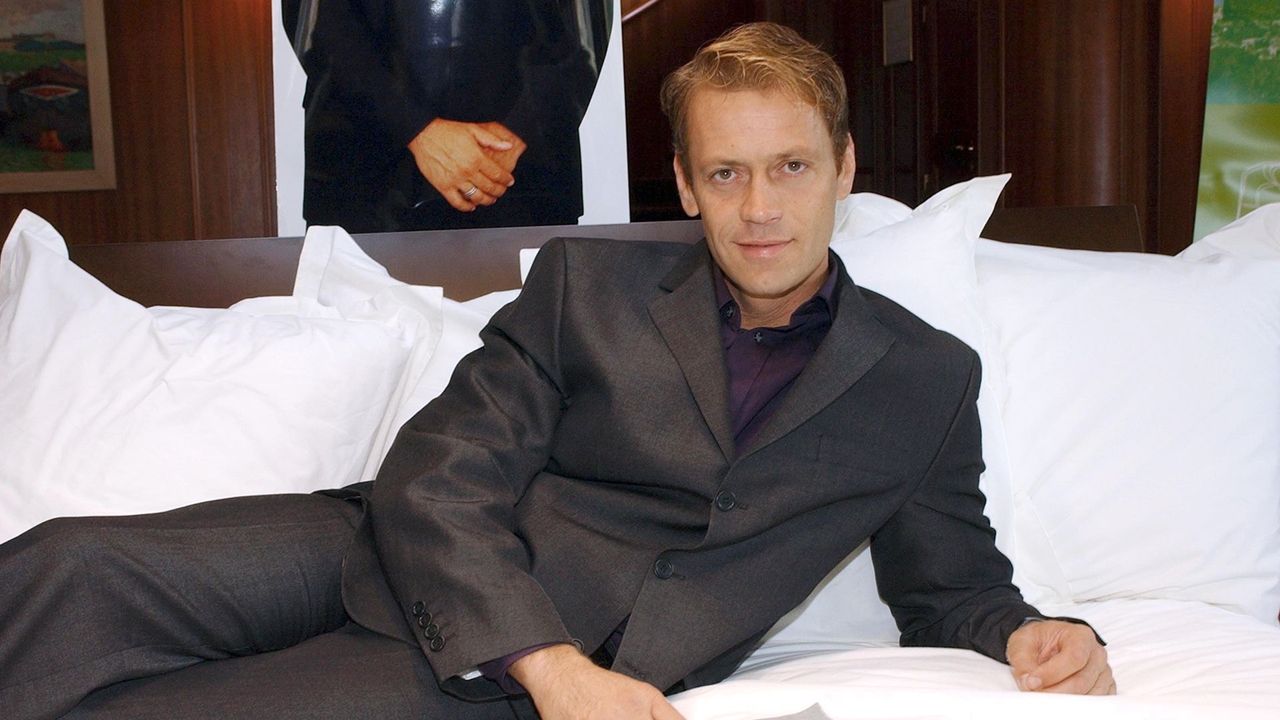
A new miniseries about so-called "Italian Stallion" Rocco Siffredi has been made by feminist filmmaker Francesca Manieri. It's a graphic and unsettling exploration of toxic hyper-masculinityWWhen Francesca Manieri was first approached by producer Lorenzo Mieli about creating a TV dramatisation of the life of Rocco Siffredi, the pornstar known globally as the "Italian Stallion", she burst out laughing.Warning: This article contains references to sexual content which some readers may find disturbingIt seemed like an improbable collaboration. Manieri, a feminist writer and director, best known as the co-creator with Call Me By Your Name's Luca Guadagnino of the 2020 gender-fluid coming-of-age HBO series We Are Who We Are, and Siffredi – the self-titled "King of Hardcore”, star of an estimated 1,300 XXX-rated films and owner of a porn empire.More like this: – The mother-and-son schemers who seduced a king – The best TV shows to watch this March – The brutal Japanese history that inspired ShogunHowever, after considering the offer, Manieri decided their polar differences might result in an intriguing work of art. "I believe that it is still quite difficult for us as women to [explore] maleness," she tells BBC Culture. "Rocco does not represent the exception of masculinity, but the excess of it, so I said to myself 'OK, let's take the opportunity to go into the core of it; to narrate the art of masculinity through a female point of view'. And I think it's very important for a man to be narrated by a woman right now."Rocco Siffredi announced his retirement from the porn industry in 2004, only to return in 2009 (Credit: Getty Images)The resulting production is the seven-part Netflix miniseries Supersex, which traces the story of Siffredi from his childhood, born into poverty as Rocco Tano in the Italian town of Ortona in the 1960s.The series takes its title from a comic book-like porn magazine, featuring a superhero called Supersex, which Tano found in the street as a young boy. He became obsessed with it, and after moving to Paris in his twenties, he fell into the sex club scene, where a chance encounter with the actor who played Supersex, Gabriel Pontello, set Tano, who later changed his name to Siffredi, off on his career to becoming one of the biggest names in the adult entertainment industry.The now 59-year-old actor has continued to star in porn films – with a few forays into arthouse cinema, in French director Catherine Breillat's films Romance (1999) and Anatomie de L'enfer (Anatomy of Hell) (2003) – and, as seen in the series, despite publicly announcing his retirement in 2004, he returned to the industry in 2009 because of his love of performing.Its unexpected focus But those drawn to Supersex expecting a thorough recap of Siffredi's adult film career will be surprised to see that his substantial body of work is glossed over, and only really mentioned in the final few episodes of the series. Instead, the show is more interested in the upbringing of Tano (played by Alessandro Borghi) and the genesis and creation of his alter-ego, Siffredi. In particular, it explores how his repressed family and abusive older half-brother Tommaso (Adriana Giannini), who switches from love-bombing to sexualising and manipulating him, impacted on his identity, sexuality and understanding of what it was to be a man.Another key moment in the story is the childhood trauma he suffers when his severely disabled brother, Claudio – who suffered brain damage after being attacked by a local gang – dies, destroying his beloved mother, Carmela (Tania Garribba), sending shockwaves through the family, and leaving Tano with a pain that he carries thereafter.It should be said the series is caveated with the captions that it's "loosely inspired" by Siffredi's life, rather than being a wholesale biopic, and Manieri says that Tommaso and the woman both brothers idolise, Lucia (Jasmine Trinca), are both fictional characters drawn from multiple people and influences in Siffredi's life. However, Claudio and his death was very real. "Claudio really was his brother, and is one of the first things that brought me into his story and why I chose to do it," says Manieri, "because of the connection between pain and power; and how he must take this power to go beyond the pain."The show features copious sex scenes, and has been dubbed Netflix's "most explicit show" ever (Credit: Netflix)Viewers who were expecting a ribald depiction of his life will also be surprised by the often grave tone of the series. Indeed, Manieri's serious approach surprised Siffredi himself, when they first discussed the series. "My approach was quite unexpected to him, so it was quite difficult at the beginning because he was shocked and it was very difficult for him to understand my plan," she says. "It was the intimacy of the tale [that shocked him], focusing on women and family. He was not expecting it to start with him as a child with his mother, with the female gaze on him. All of this made him say: 'I thought we were going to do something closer to Boogie Nights?'. So it took a while for him to understand and accept and give in to the unexpected part."But there was a generosity to him," she continues. "He realised quite quickly that we were not doing a tale that was apologetic [to excuse his actions], it was using Rocco Siffredi to go into masculinity, so I needed to have a lot of freedom. He accepted this game between the two of us and I think the game of our gazes, different positions in the world – to him, the emblem of masculinity and on the topic of femininity, that's mine. This fierce conflict made this series what it was."Speaking with Italy's FQ Magazine in 2022, Siffredi corroborated his initial difficulties gelling with Manieri's vision for the series. "There was a strong protective energy from her and it was difficult to fit in," he explained, while adding that he was happy with the end result and emphasising "this beautiful story is inspired by my life, but it is not my life".The graphic sex scenes That's not to say that the series is not provocative, nor shies away from sex. Indeed, Supersex has already been dubbed Netflix’s "most explicit show ever". Borghi, who puts in a fully committed performance as the complex Siffredi, told Variety that the shoot included about 40 to 50 sex scenes in the 95 days of filming ("It was 45, I think," confirms Manieri). But while cinematography of these is high-end and glossy – with a number of them shot for the female gaze, the camera travelling up and down Siffredi and him submitting to dominant women in some instances – like porn itself, they become repetitive and relentless. There's group sex in swimming pools, BDSM sessions in Parisian sex clubs, threesomes, foursomes and even fellatio at a funeral.It's exhausting, and brings to mind Steve McQueen's 2011 film Shame, in which Michael Fassbender plays a sex addict, who in the pursuit of lust has a breakdown when he is unable to control his compulsions; he is prisoner to his body and its desires. Siffredi has admitted to being a sex addict in the past, and even referenced the film in a 2017 Daily Beast interview. "When I saw this movie, it gave me nightmares," he said. "Night after night. Fassbender in that movie went through exactly what I went through. All of it."Italian actor Alessandro Borghi, the star of acclaimed 2022 drama The Eight Mountains, plays Siffredi (Credit: Netflix)"Shame is a good reference because I think it says something about [contemporary society]," says Manieri. "We are not able any more to combine love and sexuality. And that brings sexuality to be much more similar to an obsession. This series wants to say something; that porn represents the mirror of that kind of obsession, and [how we use it globally as] as a device for masturbation. Inside of sexuality, there's life, a power that can bring you into the light, or into the shadows."Manieri says that one of her main challenges in embarking on the show was "how will I narrate sex?". Despite it being a show about one of the most famous porn stars on the planet, "I didn't want to make a series about porn," she says, "but I wanted to make a story about what porn represents. I wanted to lift the veil. I didn't want the sex scenes to be 'hot' in a porn way, but I didn’t want them to be 'cold' in a porn way. I wanted to subvert these scenes, I want them to be hot from an emotional point of view".Manieri stands by her decision to include so many sex scenes in the series, arguing that the sex took on a more significant purpose in the story as she developed it. "When I was speaking with Alessandro and the [other] directors, I always said the same thing: Rocco knows things through sex. Sex is a device of knowledge, that's why I say that each sex scene in this series is a turning point. It's about feelings, it's about consciousness – every single [sex] act was a sort of statement, a quotation."A deeply disturbing depiction In real life in the '90s, Siffredi's porn performances became more rough and violent and in the Daily Beast interview he talks about "slapping" a woman during sex to make her climax, and how he developed a reputation for "breaking" women. Worryingly, such scenes of rough sex, including ones depicting him choking women, are also recreated in Supersex. With a 2020 BBC Disclosure and Radio 5 Live survey revealing that 71% of the sample of men between the ages of 18 and 39 surveyed said they had committed certain acts of violence or aggression against their partners during sex (spitting on them, gagging them, slapping them, or strangling them), and a third of those men admitting that they did not ask for consent beforehand, viewers may well question the decision to include such brutal scenes, as well to show a woman getting sexual gratification from the violence.Manieri says she also wanted to focus on "subverting the clichés and representations of heterosexual relationships", which is why she chose for some sex scenes to focus on the man, rather than the women, as is the standard set-up in porn. "You can [also] see in the series when there are sex scenes [in a group scenario], the men don't look at women, they look at men," she explains "and this creates a sort of little change in the point of view. This [fluidity and changing gaze] is how I think sexuality works right here, right now in 2024."Series creator Francesca Manieri wanted the opportunity to "narrate masculinity" from a female point of view (Credit: Getty Images)"The other thing was to try to show all the time the [full spectrum] of sexuality," she adds. "Even if we focused our attention on maleness in the toxic heterosexual system, there are a lot of sexualities there, everything is shown and everything is much more fluid and complex.”Whether Manieri manages to successfully recontextualise and deconstruct Siffredi's story so as to make it an examination of toxic masculinity is up for debate; it's not quite the sexual politics Trojan horse it purports to be. Often, it can veer into soap opera or telenovela territory, with moments of near-camp melodrama – the needle-drop of Haddaway's 90s Eurodance hit What Is Love in the final seconds of the series feels a little too un-serious and on the nose, for example. Also, during what are meant to be emotionally wrought moments, some of the dialogue appears clunky or unintentionally hilarious in English.Nevertheless, Supersex is an admirable attempt by a female showrunner to explore the creation of a toxically hyper-masculine identity. But given that Siffredi still works in pornography, and in an age where porn proliferates ever more across mainstream culture, such toxic hyper-masculinity is arguably flourishing more than ever. At the end of the series, Siffredi is shown being rehabilitated by finding love: if only the wider societal problems his story represents had such an easy cure-all.Supersex is available now on Netflix internationally.If you liked this story, sign up for The Essential List newsletter – a handpicked selection of features, videos and can't-miss news delivered to your inbox every Friday.If you would like to comment on this story or anything else you have seen on BBC Culture, head over to our Facebook page or message us on Twitter.